Ah... after a summer of interviewing and negotiating, the faculty position in the school of pharmacy fell through and I'm back on the job market - not that I ever really left completely. In many ways, I'm bummed because I liked the people, it seemed like a supportive and collaborative environment, and I am tired of applying for jobs. At least this happened now... its that season - academic job market season. Full of wishful ads and piles of applications currently labeled 'TO DO'. The season seems to have started a little early this year. Last year the deadlines huddled around October and November, the year before October to December. Now deadlines are well into September.
My mentors all seem optimistic now that I've got a Science paper and it looks like I'll have a paper in press very soon in a Nature Publishing Group journal (in revision after good reviews but not yet accepted). Optimism is a very nice luxury when its not you that has to wait to be weighed against a deep pool of candidates. I do hope that they're right. I guess here's to hoping.
Wednesday, August 31, 2011

Monday, August 8, 2011
Developmental Biology - Frog day
Sparked by journal club discussion today, I'm going to try to finish plugging the DMC Developmental Biology Workshop. In case you're interested, we discussed a Science article on establishing anterior-posterior polarity when planarians regenerate ... in human-speak, how the a flatworm determines whether to make a new head or tail. We were disappointed that in the end, they found a player in the mechanism but didn't actually find the way the heads or tail decision is made. :-( But... to come back to the workshop, my experience cutting and hacking at planarians to make a 2 headed worm helped me evaluate, understand and critique the paper.
So... Frog Day. We had a preview of the slimy, squirmy critters the day before when we helped collect eggs and testes. Frog day was dedicated to the frog embryo. It was an amazing nod to the cutting-edge and to history.
First was a look forward. One can imagine that as the embryo cleaves, that you just pinch the existing membrane around the cytoplasm to get many new cells. To test this, we inhibited the actin cytoskeleton during cleavage - the mechanism by which the membrane 'pinches' along the cleavage furrow. Without actual cleavage and fascinating thing occurs - white stripes start appearing in the pigmented animal half.

What are these stripes - they're new membrane that is being laid down during cleavage. So its not just a pinching. New material must also be added. Interestingly, as time continues, the orientation of the would-be cleavages are preserved. This is most likely because the mitotic spindle orientations remain uninterrupted.
In the afternoon, we went back in time to revisit THE classic frog developmental biology experiment - the Spemann Organizer. This is an embryo manipulation experiment in which pieces of embryos are transplanted. I never in a million years thought I would recreate this landmark experiment. Yet, some how I successfully excised a piece of the dorsal lip - through which cells invaginate during gastrulation. Then transferred the piece of dorsal lip into a new embryo in an attempt to make a second access - a Siamese twin. We also did a modification of this experiment with later stage neurula-stage embryos. I did eight transplants hoping to have some survive and one actually twin. Well, I got 3 to twin to varying degrees!! One of them was even better than a twin. I made a triplet. The easiest way to count heads is to look for a black dot, called the cement gland - this helps the tadpole attach to the bottom until its able to swim.
Successfully completing these experiments made the gift from the instructors even more amazing -- every participant got a Hans Spemann spider plant. Spider plants constantly make new plants as offshoots that resemble spiders hanging on threads (thus the name). I now have an offshoot of an offshoot of an offshoot, etc, originating from a spider plant in Hans Spemann's office. An amazing legacy that I hope to continue with any developmental biology students that come to work in (hopefully) my future lab. I've already started a lineage with an african violet which served as a thesis present for some of my best friends from graduate school. For a marine biologist, I seem to have a soft spot for cloning plants.
So... Frog Day. We had a preview of the slimy, squirmy critters the day before when we helped collect eggs and testes. Frog day was dedicated to the frog embryo. It was an amazing nod to the cutting-edge and to history.
 |
| 32-cell stage frog embryos |
First was a look forward. One can imagine that as the embryo cleaves, that you just pinch the existing membrane around the cytoplasm to get many new cells. To test this, we inhibited the actin cytoskeleton during cleavage - the mechanism by which the membrane 'pinches' along the cleavage furrow. Without actual cleavage and fascinating thing occurs - white stripes start appearing in the pigmented animal half.

What are these stripes - they're new membrane that is being laid down during cleavage. So its not just a pinching. New material must also be added. Interestingly, as time continues, the orientation of the would-be cleavages are preserved. This is most likely because the mitotic spindle orientations remain uninterrupted.
In the afternoon, we went back in time to revisit THE classic frog developmental biology experiment - the Spemann Organizer. This is an embryo manipulation experiment in which pieces of embryos are transplanted. I never in a million years thought I would recreate this landmark experiment. Yet, some how I successfully excised a piece of the dorsal lip - through which cells invaginate during gastrulation. Then transferred the piece of dorsal lip into a new embryo in an attempt to make a second access - a Siamese twin. We also did a modification of this experiment with later stage neurula-stage embryos. I did eight transplants hoping to have some survive and one actually twin. Well, I got 3 to twin to varying degrees!! One of them was even better than a twin. I made a triplet. The easiest way to count heads is to look for a black dot, called the cement gland - this helps the tadpole attach to the bottom until its able to swim.
 |
| Hall of fame from the class. The one in the middle with 2 visible black dots is mine. |
 |
| Twinned neurula (earlier stage). Note that the future notochord (line down the middle) splits near the bottom. |
Wednesday, August 3, 2011
the waiting game part 2
Science is often a game of rush, work, rush, work, then wait... Get proposals in, then wait months to hear if you got money to do more science. For deep-sea research, you plan for months, get on a ship, throw instruments in the water and wait... hoping the instruments will be there and have worked when you return to pick them up. If all went well, at the end of all that waiting, you'll have a brilliant data set to write up for an article. Submit the manuscript and then wait... wait to hear from the editor, wait to hear from the reviewers... wait to hear from the reviewers again... Well, part two of the publishing waiting game is over. I got the first round of reviews back. Overall... I'm quite happy. Great reviews - text edits and maybe one minor experiment. As a co-author said, especially "positive in today's era of vicious reviewing."
Side note on vicious reviewing. A couple of articles have popped up recently addressing the state of scientific review. But they're not harping on author misconduct or missing a technical flaw. Instead the articles have a new perspective - a reviewer's job is advance science, not to tear it down, not to write the ms yourself, and not to advance your own career. But it is so much easier to "destroy than to construct."
A quick guide to writing a solid peer review (Co-author is Kimberly A. Nicholas, DISCCRS V) – EOS – July 12, 2011 - http://disccrs.org/files/Nicholas_Gordon_2011_EOS.pdf
Side note on vicious reviewing. A couple of articles have popped up recently addressing the state of scientific review. But they're not harping on author misconduct or missing a technical flaw. Instead the articles have a new perspective - a reviewer's job is advance science, not to tear it down, not to write the ms yourself, and not to advance your own career. But it is so much easier to "destroy than to construct."
A quick guide to writing a solid peer review (Co-author is Kimberly A. Nicholas, DISCCRS V) – EOS – July 12, 2011 - http://disccrs.org/files/Nicholas_Gordon_2011_EOS.pdf
Friday, July 29, 2011
side note - job?
I know I've still got a couple more days to fill in from the developmental biology workshop, but its been quite busy. Somehow I've ended up in an interview process for a faculty position. I'm still not sure exactly what happened as it started with going to a friend's sister's house for a birthday and now I think I'm in negotiations for a tenure-track position in a school of pharmacy. There's still a ways to go to make sure its a good fit for both parties, but its kind of exciting to have a good prospect.
The unfortunate part is that it takes a lot of time to interview, prepare materials, etc. The good part is that I've got a great summer undergraduate in the lab, so the science is still moving forward. We'll see how this all works out... but its interesting!
The unfortunate part is that it takes a lot of time to interview, prepare materials, etc. The good part is that I've got a great summer undergraduate in the lab, so the science is still moving forward. We'll see how this all works out... but its interesting!
Tuesday, July 12, 2011
DMC DB Workshop - Day 2 urchins & chicks
Ah, urchins. I study these and still I learned quite a bit. We did what I consider more cell biology than developmental biology... but still I guess cells must divide to develop. I was amazed at what a cheap antibody from the Hybridoma bank and DAPI could accomplish. It was more beautiful than anything they showed me in college and much more informative than the cartoon drawings of chromosomes moving around. Admittedly, the class lost quite a few embryos in the washing, but I was intrigued to know that you didn't need to remove the fertilization envelope to stain. Interesting...
We got a brief introduction to frogs as Steve Black, a special guest instructor, started preparations for "Frog Day!" The frogs looked very very squirmy - poor patients for injecting hormones.
And then it was time to cut more. This time we zoomed up the evolutionary ladder to chickens. I was hesitant about chickens. The last time I 'explored' a chick embryo was in third grade. I didn't like my third grade teacher to begin with (I was vehemently opposed to wearing a sign for weeks that said ILAC - I am Lovable and Capable) and after that lesson I refused to eat eggs for 2 years. My mother thanks you. Excuse my digression. This lesson was FAR better... and proved that my third grade teacher was WRONG.
 The embryo is NOT the white things on the side. It is the white swirl in the middle or if its old enough and has made blood it is in the center of the red area (see picture above). By three days you can see the heart beat and move the blood around. Very cool.
It was the heart that we went after for our chick experiment. First we had to remove the embryo from the yolk and perform the surgery - a simple nick to the region of the future heart. This nick causes the region to separate and form two twin hearts as the chick grows in culture.
 | |
| Three spindles (green) due to the maternal contribution and that of 2 sperm... polyspermy |
And then it was time to cut more. This time we zoomed up the evolutionary ladder to chickens. I was hesitant about chickens. The last time I 'explored' a chick embryo was in third grade. I didn't like my third grade teacher to begin with (I was vehemently opposed to wearing a sign for weeks that said ILAC - I am Lovable and Capable) and after that lesson I refused to eat eggs for 2 years. My mother thanks you. Excuse my digression. This lesson was FAR better... and proved that my third grade teacher was WRONG.

It was the heart that we went after for our chick experiment. First we had to remove the embryo from the yolk and perform the surgery - a simple nick to the region of the future heart. This nick causes the region to separate and form two twin hearts as the chick grows in culture.
 |
| 3 somite chick at initial isolation in culture and post-surgery. |
 |
| 48 hours later the chick has grown in culture and developed twin hearts. Both hearts were observed to beat. |
Monday, July 11, 2011
DMC DB Workshop - Day 1 cut it up
To ease us in to the workshop, we started by learning a couple of tricks on the microscope. We made our own darkfield filters and reinhart filters. Quick and easy arts and crafts time. Reinhart filters were more fun than anything else - instant pop art! Make a yellow embryo on a red background... Andy Warhol would have been proud. Unfortunately, I didn't figure out how to use my camera with the microscope until later in the course... arg. We used some beautiful ciliates to demonstrate the power of the filters and then looked at some sand dollar plutei.
After cutting up filters, we dove right into cutting up organisms. (The theme of cutting continued throughout the course.) We chopped planarians, brown and green hydra, and lumbricus worms all in the cause of understanding regeneration... and all in rapid fire, within ~ an hour or two before dinner.
After dinner with a glass of wine, we had an introduction to sea urchin larvae - fertilization and first cleavages. I think they actually looked better in pop art than the ciliates, but I might be partial to urchins.
After cutting up filters, we dove right into cutting up organisms. (The theme of cutting continued throughout the course.) We chopped planarians, brown and green hydra, and lumbricus worms all in the cause of understanding regeneration... and all in rapid fire, within ~ an hour or two before dinner.
 |
| By the end of the course, I had a camera-shy two headed planarian. |
After dinner with a glass of wine, we had an introduction to sea urchin larvae - fertilization and first cleavages. I think they actually looked better in pop art than the ciliates, but I might be partial to urchins.
Thursday, June 30, 2011
DMC Developmental Biology Teaching Workshop
 I'm in the gorgeous woods of Maine right now, hanging out with my good friend Rhian at the Darling Marine Center. I'm here for a workshop in teaching Developmental Biology. Its a 12 hour a day workshop... and we've done some crazy things during our time already - two headed planaria, mini sea urchin larvae, a chick embryo with two hearts, and hopefully by tomorrow a twinned frog. We've still got a day and a half and flies and worms to go! I'm a bit 'knackered' so I'll fill you in on all of the details with day by day highlights and pictures when I get back. In the meantime, here's a picture of the rocky shores of Maine.
Sunday, June 19, 2011
Fellowship
 In all things in life, you should have a plan B (and if you're a super anal-retentive control freak, a plan C and D). I'm in the midst of writing an application for a postdoctoral fellowship at the University of Queensland, Australia. I'm admittedly not super excited about another post-doc... but if I've got to do one, Australia and this lab in particular is looking pretty good! I could do worse. The lab fully integrates molecular biology, genomics and larval ecology... the closest thing I've ever seen to my own research interests.
Interestingly, joining this lab was my plan A coming out of graduate school, but I didn't get the NSF International Postdoctoral Fellowship that I applied for. So no money = no Australia. I have no complaints though. I've enjoyed my time and been productive at NIH. Its interesting that this opportunity came up again. I got an email out of the blue congratulating me on the Science paper and asking me if I was still interested. Well here I am editing the fellowship application and pointing to Australia on the world map for my daughter. I could still magically get a faculty position... or I could be bouncing with kangaroos on the beach... you never know whats next.
Thursday, June 16, 2011
BlueMind

Not surprisingly, I have always been inexplicably drawn to the ocean. Throughout my teens and twenties, the first place I would go when I was stressed or sought to be alone was the ocean. The sound of the waves calmed me, the blue ripples soothed me, the vast horizon reminded me how small I and my troubles really were. Interestingly though, the Pacific Ocean has a far more powerful pull on me than any other ocean. But why?
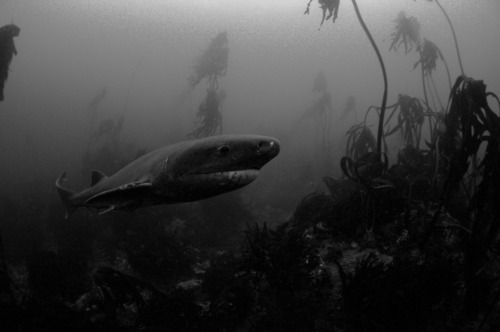

Though I hope we can come to understand humanity's draw to the ocean, I am currently satisfied with knowing that I always will be drawn to the ocean.
Wednesday, May 25, 2011
Scientific American stirs the pot
An online article in Scientific American showcases our work recently published in Science.
Massive Ocean Eddies Stir Up Life around Deep-sea Vents
 My favorite line: "It's not Kansas down there, but the new research suggests that powerful deep-sea cyclones—the whirling underbellies of eddies—sweep through these communities on a seasonal basis, transporting vent products to far-off waters."
Massive Ocean Eddies Stir Up Life around Deep-sea Vents

Subscribe to:
Posts (Atom)